



NDIS Support Coordination Q&A with Alex
NDIS Support Coordination Q&A with Alex
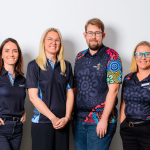
We asked Alex, one of our Brisbane-based NDIS Support Coordination Manager, a few questions so you can get to know her before reaching out.
You’ve done so many different jobs in disability services, everything from direct support through to starting your own company. What made you want to come back to Support Coordination?
Looking back over the different roles I’ve had, there has always been a common thread. I’ve enjoyed helping people navigate systems that can often feel confusing or overwhelming and supporting them to understand the options available to them.
Support Coordination brings all of that together. It gives you the opportunity to take the time to understand the person rather than focusing on one part of their life. Every participant’s circumstances, goals and support networks are different, so there is never a one size fits all approach. I enjoy taking the time to understand what matters to someone, what they are hoping to achieve and what supports already exist around them before looking at where the gaps might be.
Over the years I’ve realised that people rarely need someone to make decisions for them. More often, they need someone who can help them understand the system, explain the options in a way that makes sense and give them the confidence to make informed decisions for themselves. When people understand what is happening and why, they become much more active in their own journey. They ask different questions, they recognise opportunities they hadn’t considered and they feel like they are genuinely part of the decisions being made.
For me, that’s what keeps bringing me back. It’s a role that allows you to build relationships, work alongside people over time and support them to feel informed, respected and at the centre of their own supports.
When you’re not working how do you switch off or recharge?
Outside of work my life is actually quite simple, and I like it that way.
I’m a single mum to two boys, so a lot of my time is spent with them. We enjoy cooking together, playing board games, building Lego and spending time outdoors whenever Brisbane decides not to be too hot.
I also love baking, particularly Swedish baking. My family is Swedish and I’ve spent more than ten years trying to recreate my great grandmother’s bread roll recipe. It was never really written down, so it’s been years of trial and error. It’s still not exactly the same, but it’s close enough now that it reminds me of being with family, which is really special.
Reading has always been another way I unwind. Fantasy has been my favourite genre since I was young, particularly Terry Brooks and Raymond E. Feist. I also enjoy crocheting, swimming, going for walks, doing Pilates and solving the Rubik’s Cube.
Support Coordination is incredibly rewarding, but it also requires you to be fully present with people during some of the more challenging times in their lives. Over the years I’ve learnt how important it is to slow life down outside of work and make time for the things that help me rest and relax.
You’re based in Brisbane. What do you love about it? Do you have a favourite spot or a place you go to think?
I’ve only been living in Brisbane for a few years, so I still feel like I’m discovering different parts of the city.
I enjoy places that are quieter and surrounded by nature. The Botanical Gardens, New Farm Park, Raven Street Reserve, JC Slaughter Falls and Mount Coot-tha are probably the places I find myself returning to most often. They’re somewhere to walk, think and enjoy a bit of space away from the pace of everyday life.
I’ve never really adjusted to loving the Queensland heat, so Brisbane in winter is definitely my favourite time of year. It’s when I find myself wanting to spend as much time outside as possible.
I don’t think it’s necessarily about having one favourite place. It’s more about finding spaces where things become a little quieter. I think that’s where I do my best thinking.
You’ve been on basically every side of this sector. Does that experience change how you talk to your team about the work they’re doing?
I think it probably has.
Working in different roles, and also navigating it personally has taught me that there are always different perspectives sitting around the table.
Every participant brings their own experiences, every family has their own story and every professional around the table has a slightly different perspective. Taking the time to understand those different perspectives before jumping to a solution is something I think is really important.
One of the things I often come back to with the team is curiosity. Rather than assuming we know the answer, ask another question. Listen a little longer. Take the time to understand what’s important to the participant before deciding what the next step should be.
I also think it’s important to remember that our role isn’t to direct someone’s life. It’s to help people understand the options available to them, bring together the right people when they’re needed and support participants to make informed decisions that reflect what’s important to them. When people feel heard, respected and genuinely included in those conversations, the outcomes are almost always stronger.
What’s something about you that would surprise people who only know you from work?
One thing that tends to surprise people is that I enjoy solving a Rubik’s Cube. My fastest recorded solve is 37 seconds. I regularly switch between my GAN 14 and a Moyu (V9) cube, although my GAN is currently my cube of choice.
You’ve navigated the NDIS personally as well as professionally. How does that change how you show up in your work and what you value most in how your team works with families?
I’m a single mum to two boys who are very different personalities and constantly remind me that there isn’t one right way to see the world.
One of my sons has a number of diagnoses, so over many years we’ve navigated early intervention, therapies and the NDIS together. That experience has shaped me in ways I probably couldn’t have anticipated. It has given me a much greater appreciation for what families carry every day, how exhausting systems can sometimes feel and how important it is that people feel supported rather than judged.
What’s the difference between someone who’s just managing a participant’s plan and someone who’s actually supporting them? How would you describe that?
I think the difference comes back to where your focus sits.
If your focus is only on the plan, the conversation often becomes about funding, budgets and services. Those things are important, but they’re only one part of someone’s life.
When your focus is on the person, the conversation changes. You’re trying to understand what matters to them, what they’re hoping to achieve, what strengths already exist around them and what barriers they’re experiencing. The funding then becomes one of many tools that can help them move towards those goals.
I also think people deserve to understand the decisions that affect their lives. Good Support Coordination isn’t about directing someone’s journey. It’s about helping people understand their options, giving them the information they need to make informed decisions and supporting them to build the confidence to navigate their own supports over time.
You’ve navigated the NDIS from different angles. Can you tell us something about that?
I’ve experienced the NDIS both professionally and personally, and I think those experiences have given me different perspectives.
Working in the sector has given me an understanding of the legislation, the processes and the different pathways available. Navigating the NDIS as a parent has reminded me that knowledge doesn’t necessarily make the process feel easy.
When you’re making decisions for someone you love, it can still feel overwhelming. You’re balancing appointments, work, family life and everything else that comes with day to day life while also trying to understand a system that can be quite complex.
That experience has reinforced for me how important it is that people understand what’s happening. Not just what decision has been made, but why, what their options are and what those options might mean for them. I think people feel far more confident when they understand the journey they’re on.
If someone was deciding whether to work with us, what would you want them to know about how we show up for people?
I’d want people to know that we take the time to understand them.
Every person’s circumstances are different, and I don’t think good Support Coordination can ever be built around assumptions or a standard process. It starts by listening, understanding what’s important to someone and recognising that they are the expert in their own life.
From there, it’s about helping people understand the system they’re navigating, exploring the options available to them, bringing together the right people when they’re needed and making sure they remain at the centre of every decision.
Ultimately, I hope people walk away feeling more informed, more confident and more connected to the supports around them than when we first met. To me, that’s what good Support Coordination should achieve.
If a participant was deciding whether to work with us, what would you want them to know about how we show up for them?
I think I often come back to reminding the team that it’s easy to become caught up in the complexity of a situation. Funding, reports, legislation, providers and processes are all important, but they’re only part of the picture.
The thing that matters most is making sure we don’t lose sight of the person in the middle of it all.
I often encourage the team to slow things down, take a step back and really understand what’s important to the participant before trying to solve the problem. Have we listened? Do they understand their options? Have we explained things in a way that makes sense? Are we making assumptions, or are we responding to what they’ve actually told us?
I don’t think our role is to have all the answers. I think it’s to help people understand the options in front of them, create the space for informed decisions and make sure the participant feels heard, respected and genuinely involved in the decisions that affect their life.
When that happens, the conversation changes. It becomes less about managing a plan and more about supporting a person.
If you’d like to meet with Alex, get in touch. There’s no obligation, just a conversation to see if CoAct Support Coordination is the right fit for you.
Post categories
- Employers (58)
- Job seeker tips (262)
- NDIS Support Coordination (36)
- News (95)
- Psychosocial Recovery Coaching (5)
- Real stories (207)
- Recovery Coaches (3)
- Referral partners (1)
- Support Coordination Team (6)
Recent posts
Free NDIS information sessions in Ipswich and Logan

What is recovery coaching?


