

Building something strong from the ground up: Jenna’s story
Building something strong from the ground up: Jenna’s story
Meet Jenna Morrish, General Manager of Disability Employment and Training at IMPACT Community Services and one of the driving forces behind IMPACT’s work in the Inclusive Employment Australia (IEA) space.
Jenna leads employment services across Gladstone and Fraser Coast, two regions where IMPACT Community Services is delivering disability employment support for the first time. In just a few months, her team secured their first placement within the first month of delivery and became the first site across the network to secure an outcome for Inclusive Employment Australia (IEA).
We spoke to Jenna about what it took to build something from scratch, why responsiveness matters more than reactivity, and the advice she’s giving job seekers right now.

Can you introduce yourself and what you do at IMPACT Community Services?
I’m Jenna Morrish, the General Manager of Disability Employment and Training at IMPACT Community Services. My role focuses on leading our employment services to create meaningful opportunities for people in our community.
I also run a social enterprise called New Image Laundry, which identifies skill shortages and supports people through their employment journey. It’s all connected for me.
How would you describe IMPACT Community Services approach to employment support?
Our approach is very much participant-centred across all of IMPACT Community Services. It’s community driven. We don’t just focus on job placements. We focus on building confidence, skills and long-term stability.
We leverage strong local partnerships and tailor our support around each person’s individuality and uniqueness. It’s not just about placing someone in a role. It’s about setting them up for success and understanding what that actually looks like for them.
What were the biggest challenges during the transition to delivering IEA in Gladstone and Fraser Coast?
One of the biggest challenges was onboarding a new service model while expanding into new regions at the same time. Building capability in disability employment is significant, and it was a lot of change at once for IMPACT Community Services.
We overcame that by focusing heavily on team culture, clear communication and structured onboarding. We also invested in capability building early and that came through CoAct making sure staff understood the model, had the right tools, and felt confident applying them.
Accountability was also a big driver for me. My expectation of the team is always about reflection and doing better than we did yesterday. We tracked progress closely, which meant we could act quickly and maintain momentum throughout the transition.
How did the team feel going into implementation?
Empowered. That’s the word I kept hearing.
CoAct coming on site for that three-day journey really helped the team understand what this was actually going to look like in practice. Most of my team had come from other providers and many of them said they had never had training like it. The feedback I got was:
“Jenna, we’ve never had this before. It’s been amazing to see CoAct show up for us.”
So kudos to the CCA team and to CoAct, the preparation they provided made a real difference to how we rolled out on 1 November.
Your team secured their first placement in the first month and were first across the network to secure an IEA outcome. What does that say about the team’s approach?
It reflects our proactive approach. From the start, the team prioritised strong engagement with both participants and employers. We don’t just wait for opportunities to arise. We actively connect people to them and build the relationships that lead to real outcomes.
There’s a difference between being reactive and being responsive. I talk to the team about this a lot. Reactiveness is a short-term win. When you’re genuinely responsive to what someone needs, you get a better outcome.
For us, KPIs and client outcomes go hand in hand. If you’re supporting someone in the right way, the outcomes follow naturally. We focus on quality engagement, understanding individual needs and creating realistic pathways. That’s what drives performance.
You were involved in the co-design of the IEA service delivery model. Now that it’s live, what do you see as its strengths?
Being part of the co-design process made implementation so much smoother. We weren’t just handed a document and told to deliver it. We understood the intent behind it because we helped shape it.
The model’s strengths really lie in its flexibility. It allows us to tailor support locally while still maintaining consistency across the network. That balance matters. Every region is different. Every community has its own needs. Being part of the co-design meant we could advocate for our clients and our regions every step of the way.
How did you use existing local partnerships when moving into Gladstone and Fraser Coast?
Having worked with providers across Queensland for many years, from Cairns all the way down to Brisbane, I already had connections in those regions. So a big part of starting up was reconnecting with NDIS and other providers I’d worked with previously and getting back on that journey together.
I got on the road very early, as soon as we knew we were delivering services in those areas. I visited the providers I’d worked with before and introduced IMPACT Community Services commitment to those communities. Supporting readiness, building trust and making sure people knew we were there, that was the priority from day one.
Can you tell us a bit about the Work Fit partnership in Hervey Bay?
Work Fit is a great example of what tailored support looks like in practice. It’s a four-step programme that meets participants and students wherever they are on their journey.
It’s not just about job readiness. It’s about building confidence, routine and self-belief. A big part of what the programme does is help people shift their mindset around opportunity. A lot of people say, “I can’t do that,” without really giving themselves the chance to find out.
What I love is seeing people walk out thinking,
“If I don’t say yes, I’ll never know.” When that mindset shifts, the partnerships we’ve built really come to life. It’s a beautiful programme.
What’s next for IMPACT Community Services?
We’ve built a strong foundation and now our focus is on deepening employer relationships and expanding opportunities for participants. We’re also continuing to build capability within our teams.
There’s a real sense of momentum right now and that’s exciting. The team is celebrating weekly. We’re focused on getting our name out, building registrations and keeping that energy going. It’s looking really good.
What advice would you give to job seekers right now?
Stay open and patient with the process. We’re in tough times and we know that. But we are here to support you and wrap around you to give you the best opportunities that meet you where you are in your journey.
Everyone’s journey is different, and sometimes it takes time to find the right fit. But with the right support and mindset, there are always opportunities.
Thanks to Jenna for sharing her story and the incredible work happening at IMPACT Community Services. If you’re looking for support into meaningful employment, CoAct and our network of partners can help. We work with you to understand your situation and find a pathway that’s right for you.
Post categories
- Employers (58)
- Job seeker tips (262)
- NDIS Support Coordination (37)
- News (95)
- Psychosocial Recovery Coaching (5)
- Real stories (207)
- Recovery Coaches (3)
- Referral partners (1)
- Support Coordination Team (7)
Recent posts
Maryam, Support Coordinator (Sydney — in person + telehealth)
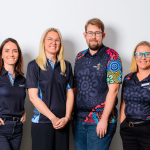
Free NDIS information sessions in Ipswich and Logan