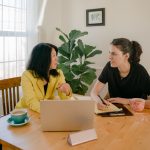


Talking disability, leadership and inclusive futures with CoAct’s Board Director Christalyne Look
Talking disability, leadership and inclusive futures with CoAct’s Board Director Christalyne Look

As someone with a physical disability, Christalyne Look has always had to fight against misconceptions and assumptions in leadership spaces. And through her career, she’s worked to smash through these misconceptions, and pave the way for future disabled leaders.
Christalyne started her career as a lawyer working at a top-tier firm, something that isn’t easy for someone without a disability, and something that’s definitely more challenging for someone with a disability.
Those environments are typically relatively conservative, so I used to want to blend in as much as possible. However, being in a wheelchair, that wasn’t always easy,” she said.
In those days, getting a graduate position was difficult, and it wasn’t the norm to have a disability. I knew that by getting that position, it would really pave the way to my success, and I’m very grateful for the opportunity to be able to set up my career for success because of the opportunities the firm gave me.
Christalyne worked long hours, working hard to dismantle perceptions about disability.
I really wanted to be known and stand out more for my legal knowledge, technical ability and expertise, not because I looked different because of my physical disability.
There are certainly barriers to inclusive leadership that I faced, and typically they’re sourced from misconceptions or assumptions made about the capabilities of someone with a disability.
I’ve worked very hard to overcome that through educating people I meet through work and personally to get around those assumptions. I’m quite open now compared to what I used to be willing to share around my disability, and that’s really helped educate the people around me and spread the word about working with someone with a disability.
Christalyne excelled, and eventually completed some leadership programs, as well as a Master of Commercial Law, and a Graduate Diploma in Corporate Governance and Risk Management. And while her career in law and numerous other industries had been huge for her, it was joining CoAct’s board as a director that made her realise she was a leader–and that being different isn’t a bad thing: it’s an invaluable thing.
I started to realise I was a leader with disability in the community when I started to accept that I was different, and the value of being different—the value I brought, to not only the boards and organisations I work for, but the broader community,” she said.
Being in a leadership position and having a disability provides a good example, and being in senior roles meant I could be someone who other people who are on their leadership journey could aspire to.
As a board director, Christalyne enjoys that she can help influence the way an organisation thinks about disability, which can set the tone for the broader community within an organisation.
It allows me to share my insights and perspectives which are often quite different to people from another background or without a disability.
When it comes to CoAct, Christalyne enjoys being able to work with an organisation that directly supports disabled people to find their own jobs and careers.
The purpose and vision of the organisation really aligns with my own personal vision, values and mission. And the CoAct community is very open and welcoming of people with diverse backgrounds, so it’s been a good fit.
However, for an inclusive future, Chistalyne says it needs to be more than just disability-related organisations that need to commit to disability representation on boards and leadership positions.
I would like to see organisations that don’t necessarily operate in the disability space having that representation from people with diverse backgrounds, including disability. That’s already started where the doors have become more open for women…. But I don’t always see that being the case for disability.
She said she’s also seen cases of tokenism, where diverse disabled voices and needs aren’t considered–and that many in the sector have a limited view and understanding of disability.
While Christalyne has never considered herself a disability advocate, she hopes her work will result in opportunities for other disabled people.
To me, increasing leadership is not just someone being given a seat at the table, but also a voice—so the opportunity to actually contribute and be heard. This is important not just to be, but to society, because people like myself are not always given the same opportunities to contribute.
Disability leadership is critical for an inclusive future–and Christalyne says there are many ways that we can all work together towards this.
There can be greater opportunities and support for people with disabilities to progress to leadership positions, and to live to their full potential,” she said.
This might include creating disability-specific opportunities and pathways so disabled people can progress, as well as opportunities for training programs and mentoring. Making sure opportunities are accessible and flexible is also exceptionally important. These adjustments shouldn’t be seen as “special treatment”, but instead as vital components of an inclusive future where disabled people can thrive.
People with disabilities can face significant challenges on their leadership journey, so they should be afforded greater opportunities and support to succeed,” Christalyne said.
It’s important to support people with disabilities on their leadership journey and to have people with disabilities in leadership positions. They provide diversity in thought and leadership, and this is necessary to build an inclusive and sustainable future for our community.
Having a leader with a disability sends a valuable message to the broader society and can challenge any negative misconceptions people may have had about the capabilities of people with a disability.
To emerging disabled leaders, Christalyne’s advice is simple:
Have the courage to speak up, to be different and to be your best self. I hope to help people understand that there are many bumps in the road and it’s not easy for someone on their disability leadership journey to succeed, but together–with the support and encouragement from society and other leaders (both those with and without a disability)–it is possible.

Zoe Simmons is an award-winning disabled journalist, copywriter, speaker, author and advocate. She writes to make the world a better place. You can find out more about Zoe on her website, or follow her on Facebook, Instagram, Twitter, LinkedIn or Tik Tok.
(Disability Employment Services Australia (DES) has now been replaced by Inclusive Employment Australia (IEA).
Post categories
- Employers (58)
- Job seeker tips (262)
- NDIS Support Coordination (37)
- News (95)
- Psychosocial Recovery Coaching (5)
- Real stories (207)
- Recovery Coaches (3)
- Referral partners (1)
- Support Coordination Team (7)
Recent posts
Maryam, Support Coordinator (Sydney — in person + telehealth)
Free NDIS information sessions in Ipswich and Logan